
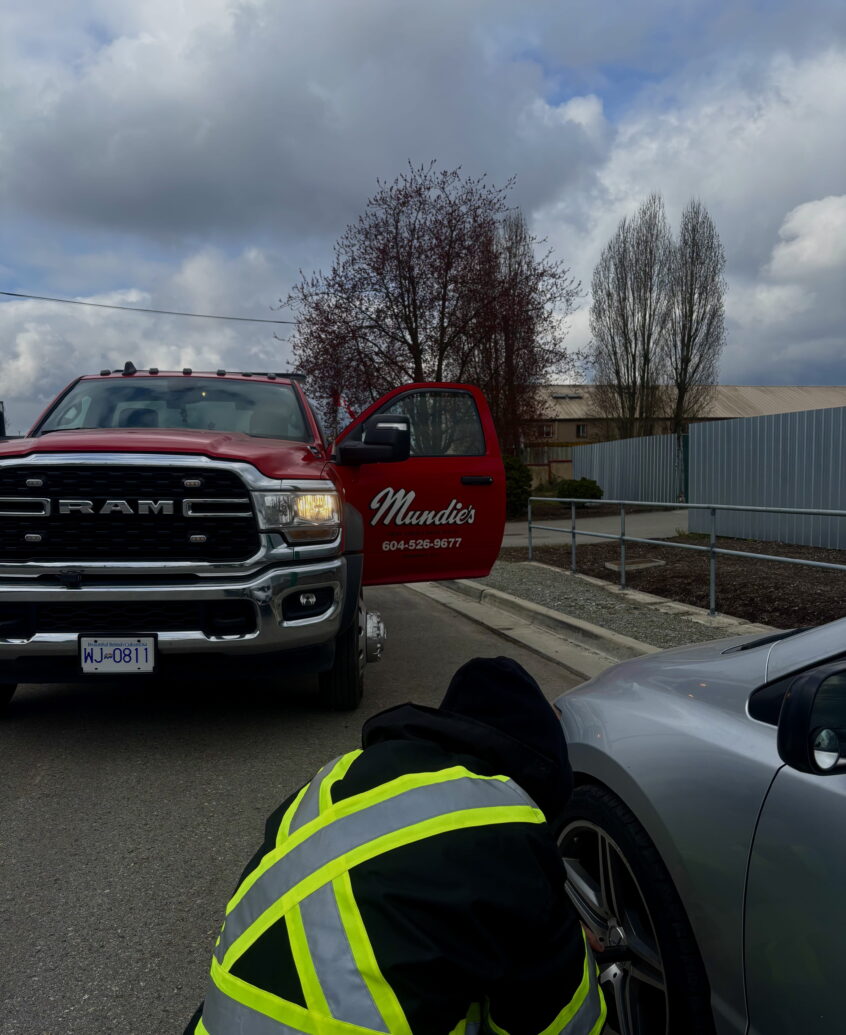
A flat tire is already frustrating on a sunny day, but during a heavy rainstorm in Vancouver, the problem can become much more stressful.
Wet pavement and poor visibility due to rain, combined with passing traffic, make roadside stops dangerous. Whether you’re driving through downtown Vancouver or travelling along Highway 1, having a plan will protect you and your vehicle.
Here’s when to handle the problem yourself and when to call for flat tire service in Vancouver.
Why Flat Tires Are More Dangerous During Vancouver Rainstorms
Reduced Visibility and Slippery Roads
A sudden flat tire makes controlling your vehicle even more difficult. Combined with poor visibility from heavy rain, it creates more dangerous situations because it makes it harder to spot other vehicles, pedestrians, bicycles, and road hazards. It also makes roads slippery, increasing the distance needed to stop safely.
Limited Space to Stop on Busy Streets
Vancouver roads aren’t always easy to navigate when your vehicle breaks down. Busy streets and narrow shoulders leave little room to pull over. Stopping near an intersection or bridge can expose you to the constant stream of passing vehicles.
Risks of Changing a Tire in Heavy Rain
Changing a tire on a slippery surface can reduce your footing. Rain can also increase the risk of tools slipping from your hands and falling onto the road. In addition, reduced visibility makes it harder for approaching drivers to notice you.
How to Recognize a Flat Tire While Driving
Your Vehicle Pulls to One Side
If your steering wheel suddenly pulls toward one side, a tire may have lost pressure. The vehicle can become harder to control, especially when turning.
Unusual Vibrations or Thumping Noises
A damaged tire can create strong vibrations or repeated thumping sounds. If you notice these signs, slow down and find somewhere safe to stop.
Tire Pressure Warning Light Turns On
Depending on the vehicle you drive, the tire pressure monitoring system warns you when tire pressure drops below a set level. The warning doesn’t always mean you have a flat, but you should check your tires as soon as it’s safe.
What to Do Immediately if You Get a Flat Tire in the Rain
Keep Control of Your Vehicle and Slow Down Gradually
Hold the steering wheel firmly and slowly bring your foot off the accelerator pedal. Avoid sudden braking or sharp turns. Let your vehicle slow down gradually while keeping control of it.
Turn On Your Hazard Lights
Turn on your hazard lights so passing drivers can be aware of your situation. Keep them on even while your vehicle is stopped, especially in heavy rain when visibility is poor.
Find a Safe Place to Pull Over
Try to find a parking lot, wide shoulder, or anywhere else that allows you to pull completely off the road and avoid moving traffic. Avoid stopping near blind corners or intersections, and don’t continue driving a long distance on a flat tire just to reach a more convenient destination. Stop as soon as you can do so safely.
Assess Whether It’s Safe to Exit Your Vehicle
Before opening your door, check the surrounding traffic. If vehicles are passing close to your car, stay inside with your seatbelt fastened until help arrives, provided your location is safe.
Call for Roadside Assistance if Needed
If you can’t change your tire safely, request roadside assistance in Vancouver. Explain your location, vehicle type, what happened, and whether you have a spare tire for replacement.
Can You Change a Flat Tire Yourself During Heavy Rain?
When It’s Safe to Attempt a Tire Change
You should only consider changing a flat tire when your vehicle is parked on solid, level ground, well away from traffic, and if you have adequate visibility of the surrounding environment. Make sure to also have enough room to perform the task without putting yourself or others at risk.
If you determine the conditions are unsafe, leave the flat tire change to a professional.
Tools and Equipment You’ll Need
Before starting, make sure you have:
- Properly inflated spare tire
- Vehicle jack and lug wrench
- Wheel lock key, if required
- Flashlight and reflective safety equipment
- Your vehicle’s owner’s manual
How to Change a Flat Tire Safely
Use your owner’s manual to follow your manufacturer’s instructions. The process often involves securing your vehicle, loosening the lug nuts, positioning the jack at the approved lifting point, and replacing the damaged tire with your spare. Tighten the lug nuts using the specified sequence and torque.
Never place yourself underneath a vehicle supported only by a jack.
When You Should Leave It to a Professional
Avoid changing a tire during severe weather, on unstable ground, or close to moving traffic. Professional roadside tire change in Vancouver is a safer option when conditions prevent you from working securely.
When to Call for Roadside Tire Change Services in Vancouver
Your Vehicle Is Too Close to Traffic
If you’re stranded near a busy intersection, highway ramp, blind curves, steep hills, areas with poor visibility, or a narrow road, a tire change can put you dangerously close to passing vehicles.
You Don’t Have the Right Equipment or Spare Tire
Some newer vehicles don’t include a spare tire. Others have locking lug nuts that require a special key. Without the necessary equipment, you’ll need professional assistance.
You’re Stranded at Night or During Severe Weather
Heavy rain, snowfall, fog, and darkness make roadside repairs more dangerous. Mundie’s Towing provides 24/7 Vancouver roadside assistance for flat tires and other vehicle emergencies.
Flat Tire Repair vs. Replacement vs. Towing
Not every flat tire needs replacing. The right solution depends on where the damage occurred and how severe it is.
When a Flat Tire May Be Repairable
A small puncture in the main tread area can sometimes be repaired if the tire hasn’t suffered internal damage. A tire professional must inspect it before deciding whether a repair is safe.
When a Damaged Tire Needs Replacement
Sidewall punctures and severe tread damage usually require replacement, because repairs aren’t safe when the tire’s structure has been compromised.
When You Need a Tow Truck Instead of a Tire Change
If you don’t have a usable spare, your wheel is damaged, you have broken wheel studs, or the vehicle can’t be safely driven, these are all situations when towing is often necessary. Our Vancouver towing services can transport your vehicle to a tire shop or repair facility.
Common Causes of Flat Tires During Vancouver’s Rainy Season
Potholes Hidden Beneath Rainwater
Heavy rainfall can hide deep potholes beneath puddles. Driving through one can damage your tire’s sidewall or wheel, leading to sudden air loss.
Nails, Screws, and Road Debris
Sharp objects on city streets and construction routes can puncture tires. Rainwater makes smaller debris harder to notice, particularly on poorly lit roads.
Worn Tires and Incorrect Tire Pressure
Underinflated tires create extra heat and wear unevenly. Overinflated tires are also more vulnerable to certain impact damage. Worn tread reduces your grip on wet roads.
How to Prevent Flat Tires During Vancouver’s Fall and Winter
Check Tire Pressure and Tread Regularly
Check your tire pressure with frequency and before longer trips. Use the pressure recommended by your vehicle manufacturer, not the maximum pressure printed on the tire, and inspect the tread for uneven wear, cracks, and embedded objects.
Avoid Potholes and Flooded Roads
Slow down when approaching puddles and damaged pavement. Avoid driving through standing water when you can’t judge its depth, since hidden potholes can cause sudden tire damage.
Inspect Your Spare Tire and Emergency Equipment
Make sure your spare tire has the correct pressure, and your jack and tools are in good condition. Check whether your vehicle uses a temporary spare, which has specific speed and distance restrictions.
24/7 Flat Tire Assistance and Emergency Towing in Vancouver
Getting a flat tire during a Vancouver rainstorm doesn’t mean you have to deal with it alone. At Mundie’s Towing & Recovery, we offer 24/7 roadside tire changes throughout the Greater Vancouver area. Our technicians can come to your location and replace your flat tire with a suitable spare when conditions allow.
If your vehicle can’t be safely driven, we also provide Vancouver towing services to get it to a repair shop.
For professional roadside assistance in Vancouver, contact Mundie’s Towing at 604-526-9677. Let our team know your location and whether you have a usable spare tire.
Frequently Asked Questions About Flat Tires in Vancouver
Is It Safe to Change a Flat Tire in Heavy Rain?
Only when you’re on firm, level ground, away from traffic, with good visibility and proper equipment. Heavy rain increases the risks of slipping and being struck by passing vehicles. When conditions are unsafe, call roadside assistance.
Can I Drive a Short Distance With a Flat Tire?
Driving on a flat tire can damage the wheel and destroy the tire. Stop as soon as you can safely do so. Don’t continue driving unless your vehicle has manufacturer-approved run-flat tires and you’re following their operating limits.
Can Roadside Assistance Help if I Don’t Have a Spare Tire?
Yes. If you don’t have a spare tire, Mundie’s Towing can arrange to transport your vehicle to a tire shop or repair facility. Mention this when requesting assistance so the team can plan the appropriate service.