
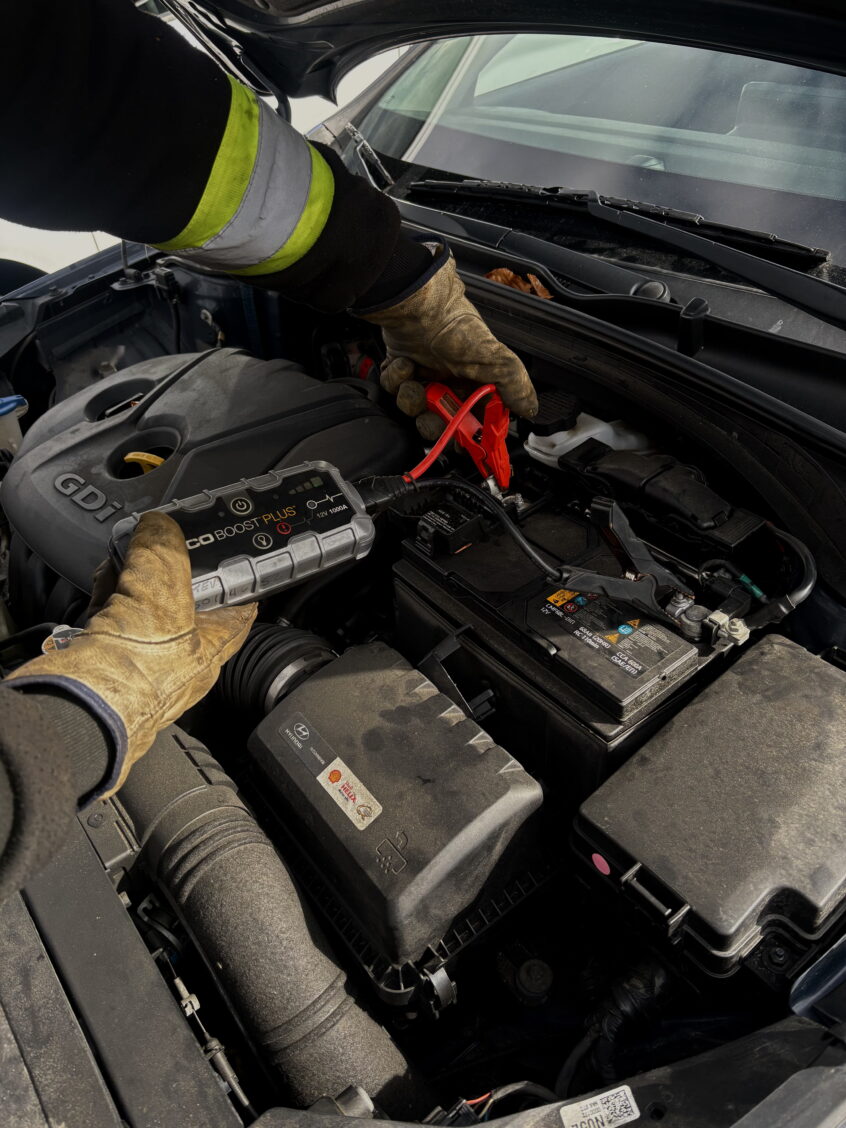
You have somewhere to be, but your car refuses to start. The engine clicks, and you find yourself stuck in your driveway on a cold Vancouver morning. A dead car battery is often the reason, but other problems can leave you stranded, too.
Knowing what to check can save you time and frustration. Here’s how to identify the problem, when to request a battery boost in Vancouver, what to do if your car still won’t start, and when your car needs towing.
Why Your Car Might Not Start on a Cold Vancouver Morning
Vancouver winters bring chilly temperatures, which can expose problems with your battery and other parts of your vehicle.
Cold Weather Weakens Your Car Battery
Cold temperatures slow the chemical reactions inside your battery, reducing its ability to deliver power and weakening it. Additionally, it takes more effort and power for your car’s engine to start in cold weather. If your battery is already weak, the moderate chill of a typical cold morning may be enough to leave you stranded.
Your Battery Is Old or Losing Its Charge
As batteries age, they lose their ability to hold a charge. Most car batteries last around five years, depending on usage and maintenance. At that point, they may begin to fall short. If your engine has been starting slowly lately, it’s probably time to replace the battery.
Corroded or Loose Battery Connections
White or greenish buildup around your battery terminals can interfere with electrical connections. Loose cables can create resistance and prevent power from flowing through the wires to activate your starter. These problems can make a healthy battery appear dead.
Starter Motor or Alternator Problems
Your starter motor turns the engine when you start your vehicle, while your alternator recharges the battery while the engine runs. If either component fails, which isn’t uncommon, your car can refuse to start even after receiving a battery boost.
Fuel System or Ignition Problems
Not every starting problem involves the battery. A faulty fuel pump, worn spark plugs, or ignition system problems can prevent your engine from starting. These issues often require professional diagnosis.
How to Tell Why Your Car Won’t Start
Clicking Sound When You Turn the Key
Rapid clicking usually points to a weak battery or poor electrical connection. A single click without the engine turning can indicate a starter problem.
Engine Cranks but Won’t Start
If your engine turns over normally but never starts, the battery is less likely to be the cause. Fuel delivery, ignition, and engine sensors are worth investigating by a professional technician.
Dashboard Lights Turn On, but the Engine Doesn’t Start
Dashboard lights require less power than the starter motor. Your battery can still be too weak to start the engine even when the lights work normally.
No Lights, No Sound, and No Response
Complete electrical failure often indicates a discharged battery, disconnected battery cable, corroded battery terminals, or another electrical fault. Start by checking for obvious battery connection problems.
What to Do When Your Car Won’t Start in Cold Weather
Before calling for help, there are a few simple things you can check:
Turn Off Lights and Other Electrical Accessories
Switch off your headlights, heater, radio, and other accessories to reduce the demand on your battery. Wait briefly before attempting another start, and avoid repeatedly cranking the engine.
Check for Warning Lights and Unusual Sounds
Watch your dashboard and listen carefully when starting the vehicle. Note whether you hear clicking, slow cranking, or nothing at all. These details can help a roadside technician identify the problem.
Inspect Your Battery for Visible Problems
If your battery is safely accessible, look for loose cables or visible damage such as corrosion. Never touch leaking battery fluid or try to jump-start a frozen, cracked, swollen battery, or one with exposed cables or a strong rotten egg smell.
Try a Safe Jump-Start if Appropriate
If you have the proper equipment and know your vehicle’s jump-start procedure, a boost can restore enough power to start the engine. Follow your owner’s manual carefully, since incorrect connections can damage electrical components or cause injury. If you’re unsure, leave the job to a professional.
Call for Professional Roadside Assistance
When basic checks don’t solve the problem, professional help is the best solution. Roadside assistance in Vancouver gives you access to battery boosts and other emergency services without arranging a tow immediately.
When to Call for a Professional Battery Boost in Vancouver
Your Battery Is Completely Discharged
If your dashboard stays dark and your engine makes no sound, your battery could be fully discharged. A technician can perform a safe boost and help determine whether the battery needs further attention.
You Don’t Have the Equipment to Jump-Start Your Car
Not everyone carries jumper cables or a portable booster. If that’s your case, rather than depending on another driver, request a professional battery boost service with equipment suited to your vehicle.
You’re Stranded in an Unsafe Location
If your car won’t start near a busy Vancouver intersection, on a highway shoulder, on narrow roads, or in another hazardous location, prioritize your safety. Turn on your hazard lights if they work, avoid standing near traffic, and call for assistance from a safe place.
What if Your Car Still Won’t Start After a Battery Boost?
A battery boost provides temporary starting power rather than repairing a failing battery or other mechanical problems.
Signs of an Alternator or Starter Problem
If your vehicle starts after a boost but stalls again, your alternator or charging system could be failing. If the engine refuses to turn over despite having sufficient battery power, the starter may be the reason.
When Your Vehicle Needs Professional Repairs or Towing
If a boost doesn’t work, don’t try starting repeatedly to avoid overheating the starter motor. A mechanic can test the battery, charging system, and starter to identify the cause.
When your vehicle can’t be driven safely, Vancouver towing services can transport it to a repair shop or other location of your choice.
How to Prevent Car Starting Problems During Vancouver Winters
Test Your Battery Before Winter
Have your battery tested before temperatures drop, especially if it’s over three years old, to identify weak performance before you’re left stranded.
Keep Battery Connections Clean
Check your battery terminals for corrosion during routine maintenance. Have any buildup cleaned and loose connections secured using proper safety procedures.
Maintain Your Vehicle’s Charging System
Ask your mechanic to inspect your alternator and charging system during regular servicing. Addressing charging problems early helps prevent unexpected battery failure.
Keep a Winter Emergency Kit in Your Car
Vancouver weather can change quickly, especially when travelling toward higher elevations. Keep a winter emergency kit that includes:
- Portable battery booster or jumper cables
- Flashlight and spare batteries
- Warm blanket and extra clothing for long waits
- Phone charger and basic emergency supplies
- Reflective warning triangle
These supplies make unexpected roadside delays easier to manage.
24/7 Battery Boost and Emergency Towing Services in Vancouver
A car that won’t start can ruin your morning, especially when you’re facing a busy commute or trying to get home late at night.
At Mundie’s Towing & Recovery, we provide 24/7 battery boost services throughout Greater Vancouver.
Our technicians use professional equipment to help drivers with dead batteries get moving again. If your vehicle needs more than a jump-start, our Vancouver roadside assistance team can help arrange the right service.
Call Mundie’s Towing at 604-526-9677 for assistance when your car won’t start.
Frequently Asked Questions About Cars Not Starting in Cold Weather
Can Cold Weather Kill a Car Battery Overnight?
Cold weather reduces battery performance, especially when the battery is old or partially discharged. A weak battery that worked yesterday can fail to start your vehicle the next morning.
How Can I Tell if It’s My Battery or Alternator?
A weak battery often causes slow cranking or clicking during startup. A failing alternator can cause battery warning lights, electrical problems while driving, or repeated battery discharge. Professional testing is the most reliable way to identify the cause.
Will a Battery Boost Work if My Battery Is Completely Dead?
A boost can start some vehicles with fully discharged batteries if the battery and electrical system are otherwise functional. However, a damaged or failed battery may require replacement.